
The architecture of modern grid stabilization has undergone a rapid evolution. As commercial entities and industrial plants look to buffer their operations against energy price volatility, the deployment of modular storage has become a mainstream strategy. However, as projects grow in ambition, the approach to hardware selection must evolve from simple, small-scale modular units to high-density, centralized configurations. Understanding the shift from smaller 50kW configurations to the robust 500kW industrial class is essential for engineering, procurement, and construction firms tasked with building resilient renewable infrastructures. By utilizing advanced hardware from a trusted partner like Sunway Solar, developers can bridge the gap between basic load-shifting needs and the demands of true utility-scale integration.
The Engineering Evolution of Modular Storage
In the early stages of commercial energy adoption, businesses often relied on multiple small-footprint units to manage their energy loads. A 50kW cabinet serves as an excellent entry point for smaller facilities seeking to reduce peak demand charges or provide basic, short-term backup. These smaller units allow for granular, iterative scaling; as a facility’s energy requirements increase, additional modules can theoretically be linked in parallel. However, this decentralized approach brings its own set of logistical challenges. As the number of units grows, the complexity of the communication network, the cabling, and the synchronization of the battery management systems becomes a significant hurdle for on-site engineering teams.
For firms managing larger portfolios, this “daisy-chaining” of smaller units can lead to increased installation time, greater wiring footprints, and a more complex maintenance profile. The industry has responded to these challenges by moving toward high-capacity, integrated solutions. A centralized, industrial-grade outdoor solar energy storage system designed for high output provides a more unified approach. By packing higher energy capacity into a single, pre-configured cabinet, project managers can drastically reduce the number of installation points, simplifying the balance of system requirements while improving the overall reliability of the installation.
Moving to High-Capacity Infrastructure: The 500kW Benchmark
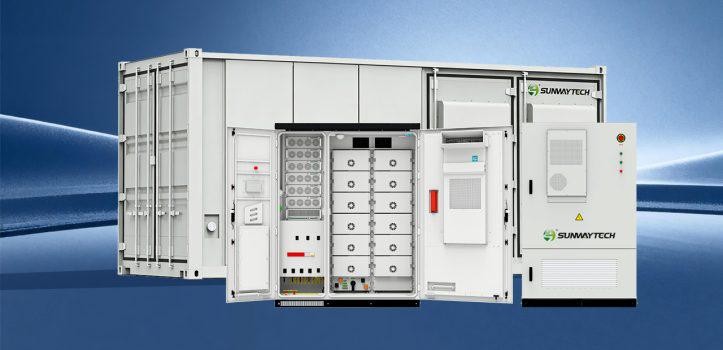
Transitioning to a 500kW/1075kWh class system represents a significant shift in deployment strategy. This scale of infrastructure is intended for heavy-duty industrial applications—such as large-scale manufacturing sites, microgrids, or commercial campus stabilization—where energy density and performance consistency are non-negotiable. The 500kW capacity threshold allows for significant peak shaving and frequency regulation that smaller units simply cannot replicate at the same price-to-performance ratio.
At the heart of such an energy storage battery system lies a sophisticated power conversion and thermal management architecture. The intelligent 500kW/1075kWh air-cooling outdoor cabinet is engineered to balance high energy density with operational safety. Utilizing advanced lithium-iron-phosphate (LFP) technology, these cabinets provide a robust energy profile, capable of maintaining high round-trip efficiency even under challenging environmental conditions. The advantage here is twofold: developers reduce the physical area required for the storage infrastructure, and they gain a system that is factory-tested as a unified whole. This eliminates much of the guesswork associated with commissioning disparate, smaller modules in the field, ensuring that the system is ready to function immediately upon grid integration.
Optimizing for Efficiency and Environmental Resilience
One of the primary concerns for any industrial deployment is the consistency of environmental protection. When scaling to a 500kW capacity, the sensitivity of the internal components to external weather conditions is amplified. Sunway Solar addresses this through industrial-grade cabinet engineering that incorporates intelligent air-cooling protocols. Unlike passive designs that might struggle with uneven temperature distribution in dense racks, the intelligent cooling system actively modulates airflow based on real-time data from the battery management system. This ensures that internal modules remain within their ideal operating parameters, regardless of external ambient shifts.
This level of intelligent control is critical for maximizing the lifecycle of an energy storage battery system. By preventing localized hot spots, the system ensures that the LFP cells operate with long-term stability, protecting the project’s internal rate of return. For EPC firms, this means fewer maintenance calls and higher operational uptime. Furthermore, the modular nature of the cabinet—even at this larger scale—ensures that if servicing is required, the internal architecture is designed for rapid accessibility. This creates a predictable maintenance schedule, allowing site technicians to perform routine inspections and necessary upkeep without significant downtime.
Strategic Procurement for Long-Term Energy Stability
As organizations evaluate their energy roadmaps for the next few years, the selection of an outdoor solar energy storage system must be viewed as a long-term capital investment. Moving from smaller, modular deployments to a high-capacity, centralized platform is a sign of a maturing energy strategy. It allows businesses to consolidate their energy management, simplify their procurement pipelines, and leverage the economies of scale offered by professional-grade industrial cabinets.
Engaging with Sunway Solar provides developers with a clear pathway to securing high-performance infrastructure. Their expertise in manufacturing high-capacity cabinets ensures that every unit meets stringent international standards, providing the necessary documentation and safety compliance for large-scale utility projects. When businesses align their procurement with a manufacturer that understands both the logistical needs of an EPC firm and the technical requirements of an industrial site, they are better equipped to handle the demands of the modern energy landscape. The transition toward high-density, air-cooled storage represents the next logical step in the decarbonization of commercial operations. By prioritizing robust hardware, precise thermal management, and proven scalability, firms can ensure that their infrastructure is not only meeting current power demands but is also prepared for the evolving, high-intensity needs of future energy markets.