
Medical technology providers are increasingly exploring immersive display solutions to improve visualization accuracy and workflow efficiency. As imaging data becomes more complex, integrating a personal cinema headset into clinical environments offers a practical way to support clearer viewing experiences while maintaining mobility. While many consumers associate wearable displays with VR for watching movies, the same optical advantages are now being adapted for healthcare applications.
Improved Visualization for Medical Professionals
Advanced imaging tasks such as radiology review, surgical planning, and minimally invasive procedures require consistent image quality. A high-performance personal cinema headset can deliver high-definition visuals directly to clinicians, reducing dependency on fixed monitors and enabling more flexible viewing positions.
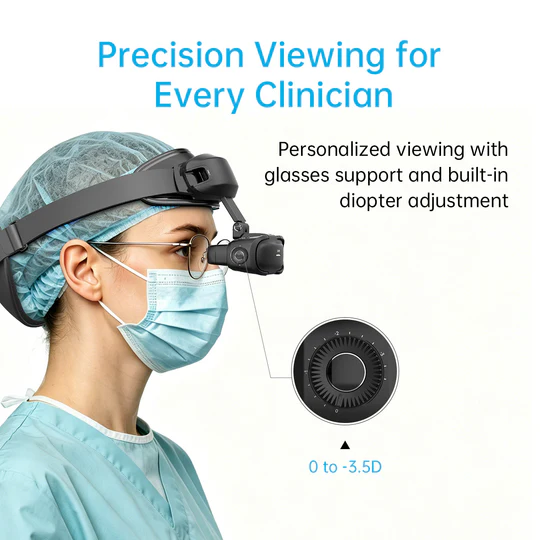
The NEDO Professional Head-Mounted Visualization System M1 demonstrates how wearable displays can support clinical precision. Its unobstructed hand visibility preserves wide peripheral sight, allowing surgeons to view medical imagery while naturally monitoring hand movements. This design helps maintain awareness of instruments, patients, and surrounding medical staff without disrupting workflow.
Although wearable displays are commonly marketed as VR for watching movies, medical institutions are recognizing their value beyond entertainment. The immersive viewing experience allows users to focus on critical visual details with fewer distractions from the surrounding environment.
Stable 3D Imaging in Dynamic Environments
Reliable depth perception is essential in medical procedures involving 3D imaging. The NEDO M1 provides stable 3D perception regardless of viewing angle, ensuring clinicians receive consistent brightness, color fidelity, and stereoscopic accuracy from multiple operating positions.
This feature is particularly useful in surgical settings where physicians frequently change posture. A personal cinema headset with dependable 3D performance can support smoother decision-making and reduce visual inconsistency during long procedures.
As the concept of VR for watching movies evolves, industries such as healthcare are applying similar near-eye display innovations to solve professional challenges.
GOOVIS and the Future of Near-Eye Medical Displays
GOOVIS has focused on Near-Eye Display Technology for nearly a decade, redefining immersive visual experiences through lightweight, high-definition head-mounted displays. Its solutions combine cinematic clarity, portability, and advanced optical performance. By extending technology once associated with VR for watching movies into healthcare, GOOVIS continues to position the personal cinema headset as a valuable tool for professional medical imaging workflows.